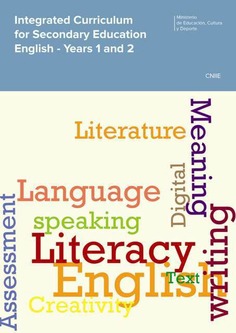

Integrated Curriculum for Secondary Education English - Years 1 and 2
Rachel Kelly , Susana Gómez-Randulfe , Denise Heather , Mª Leonor Trenchard , Mercedes Bravo , Miriam Martínez Taboada , Claire Manners , Deborah Richards , Raquel Rodríguez , Mar Román , Teresa Reilly , Mª Pilar Medrano
The MEC/BC bilingual project, initiated in 1996 in primary as a unique experiment within the Spanish state education system, and in September 2004 the classes that had started their bilingual education 8 years earlier took the project forward into Secondary schools.The formal agreement between the MEC/BC states that the aim of the project is to provide students from the age of three to sixteen with a bilingual, bicultural education through an integrated Spanish/English curriculum based on the Spanish National Curriculum and aspects of the National Curriculum for England and Wales. The implantation of such a curriculum requires, firstly, with regard to English as a subject, a very different classroom approach from the traditional EFL classroom where the focus is on learning English as a foreign language; secondly, a similar new methodology for teaching and learning other curricular areas through English. Such an integrated approach sits very positively within the Directives of the Council of Europe which insists on the need for students to be competent in three European languages by the end of the obligatory period of Secondary Education and that the learning of the first foreign language should begin in the early years of formal education. In addition to this, the secondary integrated curricula have consistently focused on the continuing development of students¿ skills and learning strategies, thus firmly establishing learning as a lifelong process. The specific objectives of the Project in the Secondary education level are to: continue the acquisition and learning of both languages through an integrated content-based curriculum, encourage awareness and understanding of the diversity of both cultures, facilitate the exchange of teachers and students, encourage the use of modern technologies in learning other languages, promote the certification of studies under both educational systems, if and when appropriate.
- Materia
- Educación Secundaria Obligatoria
- Idioma
- English
- Editorial
- Centro Nacional de Innovación e Investigación Educativa (CNIIE)
- EAN
- 9788436954234
- ISBN
- 978-84-369-5423-4
- Edición
- 1
- Fecha publicación
- 01-01-2012
Sobre Rachel Kelly (Escritor)

Sobre Susana Gómez-Randulfe (Escritor)
Sobre Denise Heather (Escritor)
Sobre Mª Leonor Trenchard (Escritor)
Sobre Mercedes Bravo (Escritor)
Sobre Miriam Martínez Taboada (Escritor)
Sobre Claire Manners (Escritor)
Sobre Deborah Richards (Escritor)
Sobre Raquel Rodríguez (Escritor)
Sobre Mar Román (Escritor)
Sobre Teresa Reilly (Escritor)
Sobre Mª Pilar Medrano (Escritor)
Libros relacionados
Boletín Oficial del Ministerio de Educación y Ciencia año 1972-1. Actos Administrativos. Números del 1 al 13 e índice 1º trimestre
Revista de educación nº 282. Teoría del currículo
La dirección del centro escolar público
Revista de educación nº 160
Boletín de noticias nº 46
Calanda nº 4. Revista didáctico-cultural
Espiral nº 24. Revista de la Consejería de Educación en Bulgaria
Boletín de educación educainee nº 49. Panorama de la Educación 2016. Informe español
Investigaciones educativas C.I.D.E. - I.C.E.s 1982-86. Catálogo
Revista de educación nº 357. Nuevas perspectivas en la sección de idiomas de la Prueba de Acceso a la Universidad