
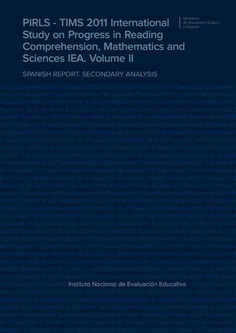

PIRLS - TIMS 2011. International study on progress in reading comprehension, mathematics and sciences. IEA. Volume II
The PIRLS and TIMSS studies of the IEA (International Progress Report on Reading Comprehension; Trends in International Study of Mathematics and Sciences, respectively) provide over 60 participating countries with the information needed to improve teaching and learning in the areas of Reading, Mathematics and Science based on the performance data of the students in 4th year of Primary Education and 2nd year of Compulsory Secondary Education. Together with these data, they also contain a wealth of information on the availability of school resources and the quality of the curriculum and teaching. This evaluation provides countries with an opportunity of measuring the progress of educational performance in these three areas, as well as empirical information about the contexts of schooling. In Volume I of the Spanish Report two studies are described: PIRLS and TIMSS, their results from a general point of view as well as by levels, its relationship to the social, economic and cultural context and the school context. Volume II contains the research carried out by several different groups where it has been attempted to link particular social and family aspects to the results obtained in Spain by the students of 4th year of Primary Education, in tests of Reading (PIRLS) and Mathematics and Sciences (TIMSS). Six research groups from different disciplines, with extensive experience in the analysis of the results of international educational studies, have carried out reports which integrate Volume II of the Spanish Report of the PIRLS and TIMSS.
- Materia
- Evaluación y control de calidad
- Idioma
- English
- Editorial
- Instituto Nacional de Evaluación Educativa
- EAN
- 9788436954210
- ISBN
- 978-84-369-5421-0
- Edición
- 1
- Fecha publicación
- 01-01-2013
Libros relacionados
Tinta China nº 7
PISA in Focus 128. El triángulo del aprendizaje permanente: Estrategias, Motivación y Confianza en uno mismo
Colección legislativa año 1981
EDIF 73. ¿Qué opciones tienen los nuevos estudiantes de la educación terciaria?
Anuario brasileño de estudios hispánicos XXIII
Educación infantil. Grado superior
Revista de educación nº 312. Investigación educativa
Problemas modernos de Ciencias Naturales. Estudios Monográficos. Perspectivas genéticas
Vivir y trabajar en Europa. Unidad didáctica
Azulejo para el aula de español nº 1